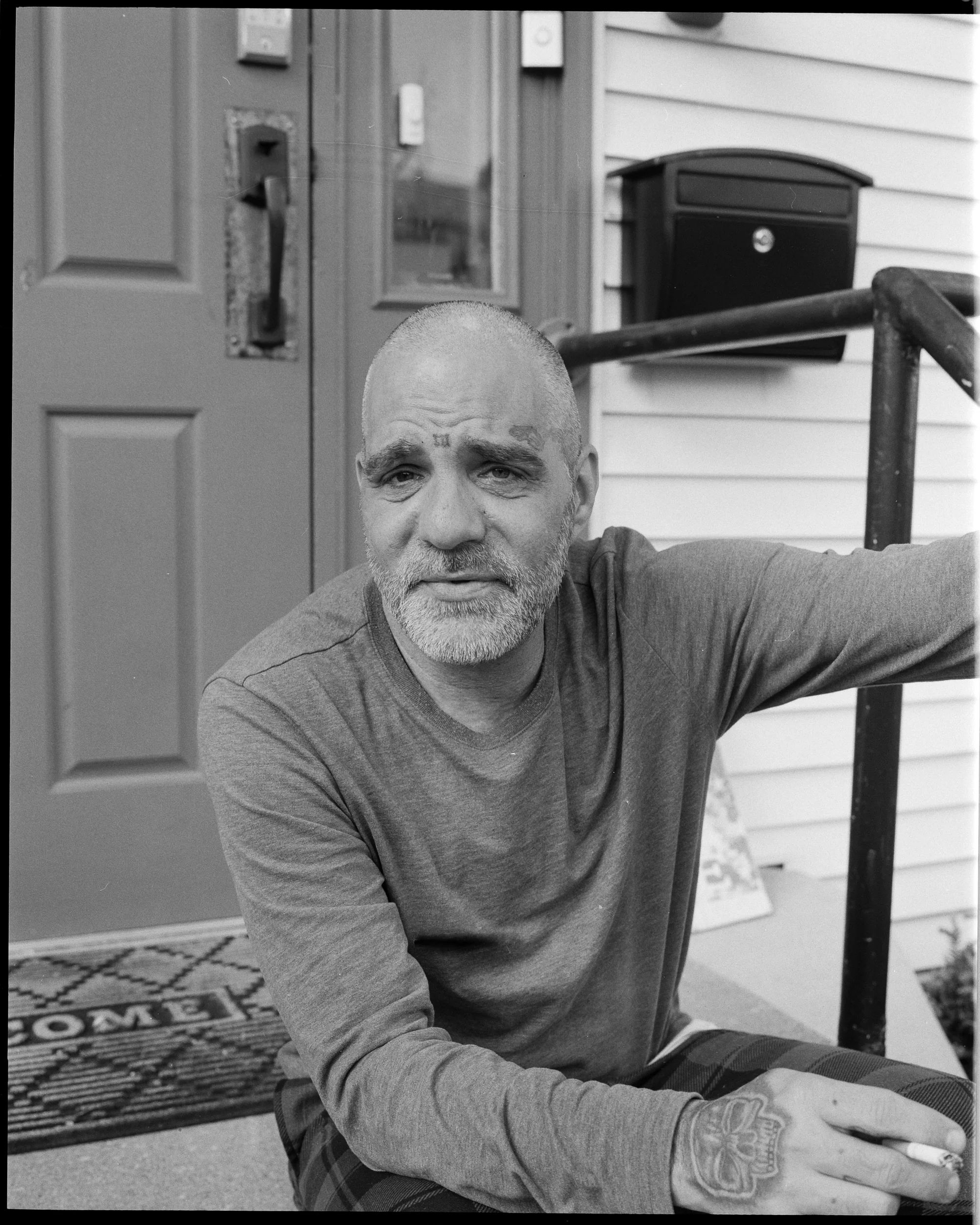
Tomorrow’s Neighbors
Growing up in China, much of what I knew about American prisons came from movies. They portrayed prison as a world unto itself, shaped by violence, hierarchy, gangs, trade, and its own unwritten rules. While studying photography and sociology in Pennsylvania, I became curious about that world and began looking for a way to photograph it.
After several unsuccessful attempts to gain access to a state prison, I met Kurt, who had spent twenty-four years incarcerated and now runs Tomorrow’s Neighbors, a reentry program in Carlisle, Pennsylvania that provides housing and support for people recently released from prison. I asked if it's okay for me to go photograph the place and he said yes. Very quickly, my interest shifted away from prison life itself and toward what happens after release: how people rebuild routines, relationships, and a sense of place after years or decades of confinement.
During my first visit, I spent two days at the house photographing, talking, cooking a Chinese meal for the residents, and listening. Conversations moved between prison hierarchy, depression, loss, family, responsibility, friendship, and the difficulty of returning to a society that had changed considerably while they were away. What had initially seemed distant and almost mythological became increasingly personal and complicated.
As the project developed, I became interested in the space between incarceration and belonging. Everyday acts—cooking, doing laundry, setting up a tent, sharing meals, reading letters, or simply sitting together—can carry a different weight when someone is rebuilding a life after decades away. The photographs follow those moments, as past experience continues to shape the present while new routines, relationships, and possibilities begin to form.
I have plans to continue returning to Tomorrow’s Neighbors as an ongoing project, following the people and the program as they navigate reentry, memory, responsibility, and the difficult process of becoming part of a community again.